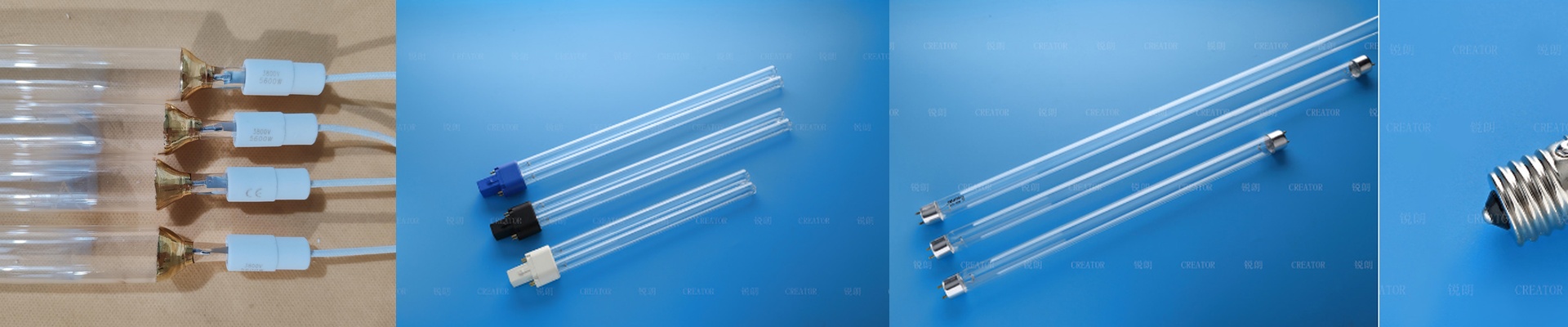
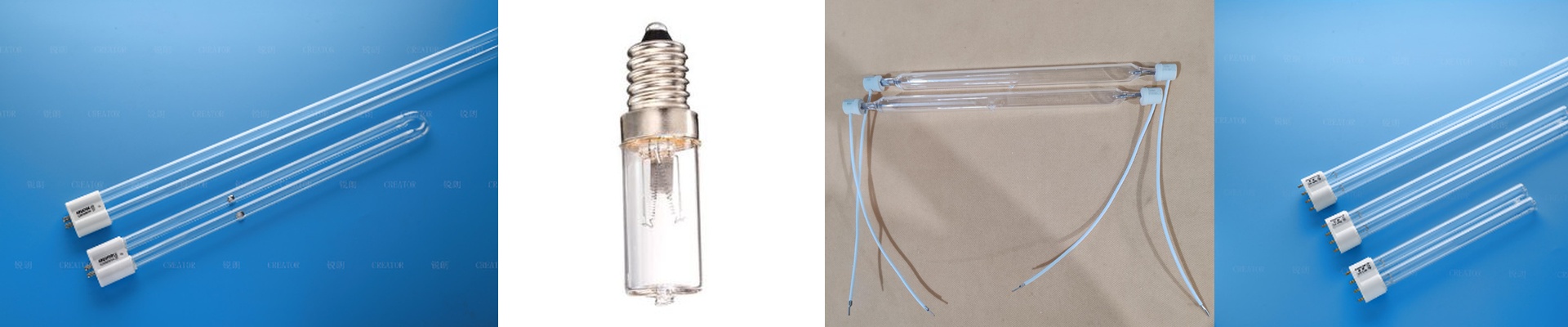
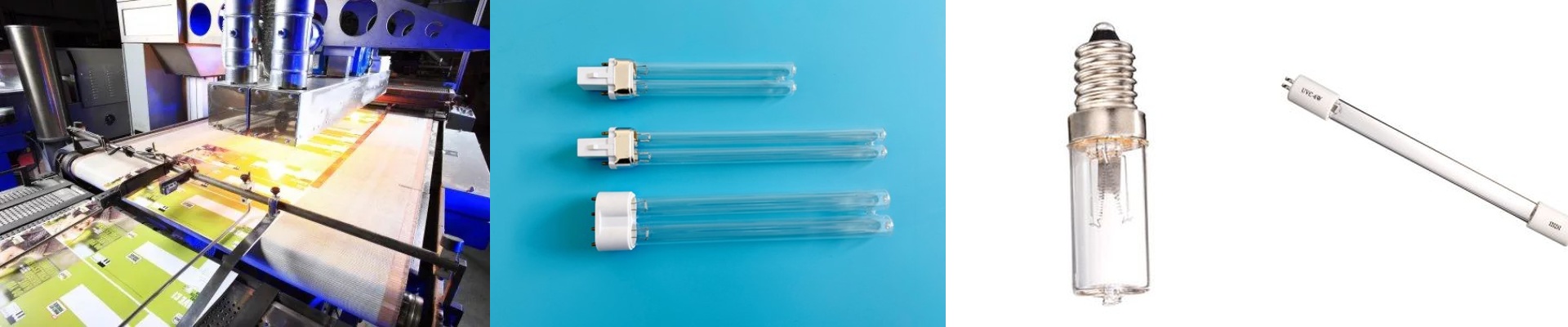
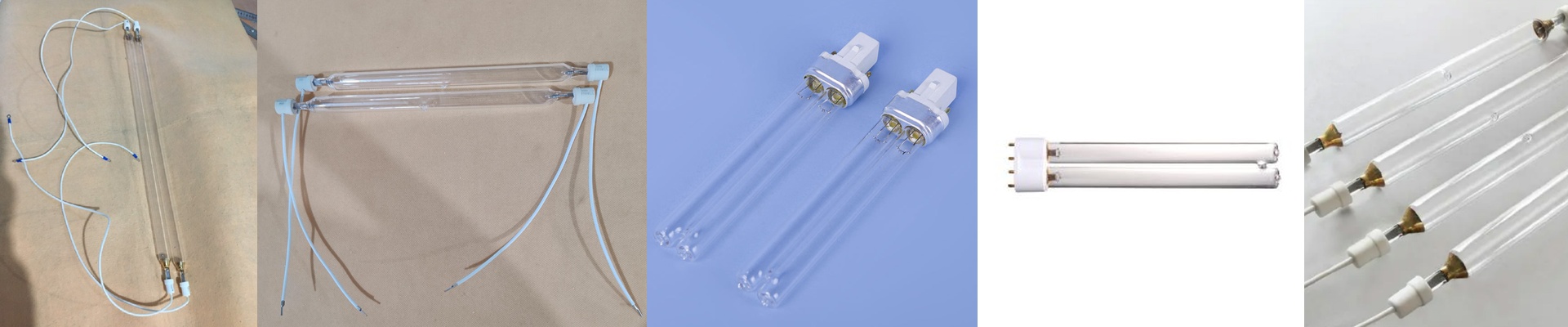
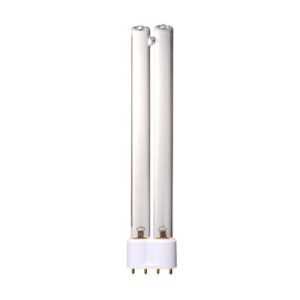
On a premium press, color isn’t a vibe—it’s a measurable output. When a top streetwear brand expects a saturated red that lands the same run after run, you can’t afford cure that drifts, dot gain that wanders, or ink tack that changes on you. Standard lamps tend to throw a wide spectral curve, over-curing some photoinitiators while leaving others short. The color shifts under the lamp, then shifts again as it cools and ages. Custom-tuned UV lamps fix this at the physics level. We control spectral output and energy density so the ink cures the same way, every time.
What matters, technically
In industrial UV curing for pigmented systems, the lamp isn’t just a light source—it’s a matched driver for the photoinitiator package and the pigment load. The levers that matter are wavelength, spectral width, peak irradiance, and delivered energy density. We build around the dominant UV-A lines—365 nm, 385 nm, and 405 nm—because they cut through pigments better than short-wave UV. A tight band around 365 nm gives you cleaner depth control in dense whites and dark bases. The 385–405 nm range speeds up surface cure on color layers without trapping uncured material underneath. The choice is application-driven: 365 nm for deep cross-linking under opacity, 385 nm for a balanced surface/through-cure, and 405 nm when you need fast top-surface polymerization and want to protect gloss and dot integrity. On the floor, peak irradiance and energy density are the controls you actually feel. Peak irradiance (mW/cm²) sets how fast the ink surface hits the photoinitiator activation threshold. Energy density (mJ/cm²) decides whether the cure propagates all the way through the film thickness. With high-pigment inks, not enough energy density leaves behind uncured material that migrates and dulls color. Too much irradiance skins the surface too fast, trapping reactive components and hurting adhesion. We tune lamp output so the cure profile follows the ink chemistry—not the other way around. Lamp stability is just as measurable. As lamps age, output drops and spectral balance drifts, and cure response changes even when your line speed and power settings stay the same. Our custom lamps hold output within tight tolerance bands over long life, and we specify reflector geometry and dichroic coatings to preserve spectral selectivity. The payoff is repeatable color: consistent density, predictable dot gain, and cured film properties that stay put shift after shift.
Why this matters in premium fashion and streetwear
High-end fashion and streetwear live on saturation and accuracy—both of which are straight-up constrained by cure chemistry. Pigmented inks, especially dense bases and vivid spot colors, absorb UV energy. If the lamp spectrum doesn’t line up with the photoinitiator absorption bands, the cure turns uneven: the top layer sets fast while the bottom stays under-cured. That non-uniform cross-linking changes optical density and shifts perceived color. Match the lamp spectrum to the ink system, and you get consistent cross-linking from the surface down to the substrate. The result is color that holds steady to the proof, in daylight and under controlled viewing. Saturation is also a function of cure completeness. Under-cured ink leaves unreacted monomers that keep migrating, dulling color and messing with gloss. Over-cure can harden the surface too quickly, trapping reactive components and leading to micro-cracking or poor adhesion on flexible substrates. Either way, you lose control of the color intent. A tuned lamp delivers the right energy density to finish polymerization without overdriving the surface. That improves color purity and keeps dot reproduction predictable—critical when the job relies on high-contrast graphics and tight registration. Operationally, custom UV lamps cut variability across shifts and across machines. When lamp output is stable, setups repeat. Operators spend less time compensating for cure differences by tweaking line speed or power, and more time running consistent jobs. That means fewer scrap sheets, fewer reprints, and fewer color approvals that stall production.
What you need to know up front
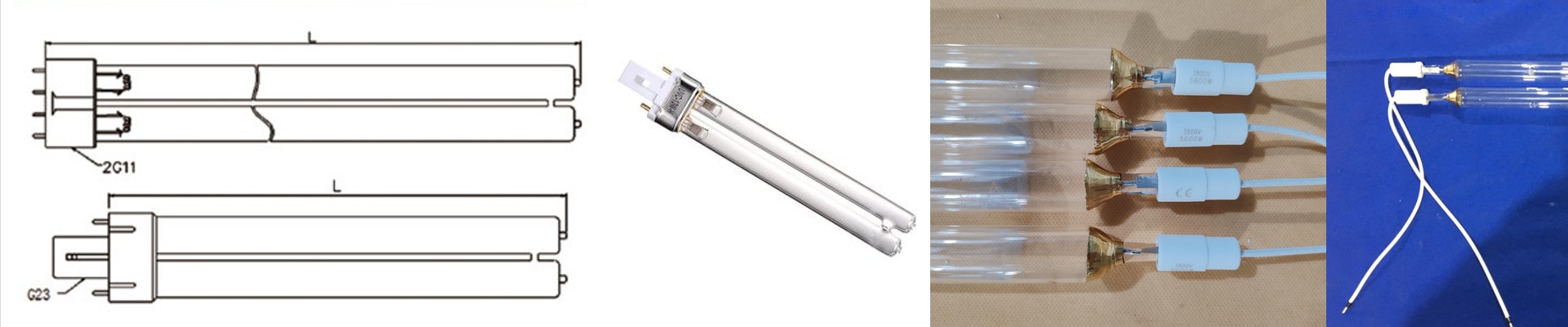
Custom UV lamps aren’t plug-and-play in every plant. Integration depends on the curing module you already have—reflector geometry, power supply, and cooling. Lamp arc length, terminal type, and mounting have to match the fixture, and the power supply must deliver stable current with minimal ripple to keep the spectrum consistent. If the system was designed around ozone-generating short-wave output, you’ll need to recheck exhaust routing and substrate temperature management when you switch to an ozone-free or narrow-band setup. Cooling is a constraint you can’t talk past. High irradiance creates heat that can distort thin substrates and change ink flow. We size the lamp and reflector package to hit the required irradiance without overheating the print surface, but your chiller capacity and airflow have to support the duty cycle you’re running. On high-speed jobs, temperature stability is part of color stability. And compatibility is chemistry-specific. A lamp tuned for one ink series can underperform with a different photoinitiator package, even at the same nominal wattage. Treat lamp selection as part of the ink formulation process: specify the photoinitiator absorption profile, pigment loading, and film thickness, then match the lamp spectrum and energy density accordingly. If you run premium color and hold yourself to tight ΔE tolerances, lamp spectral control isn’t an add-on—it’s a process control. Match the lamp to the ink, and color becomes repeatable by design.